Woodworker buys his own knock-off
Woodworker Chris Elsasser discovered his work was being knocked-off by a seller on Alibaba, so he bought one.


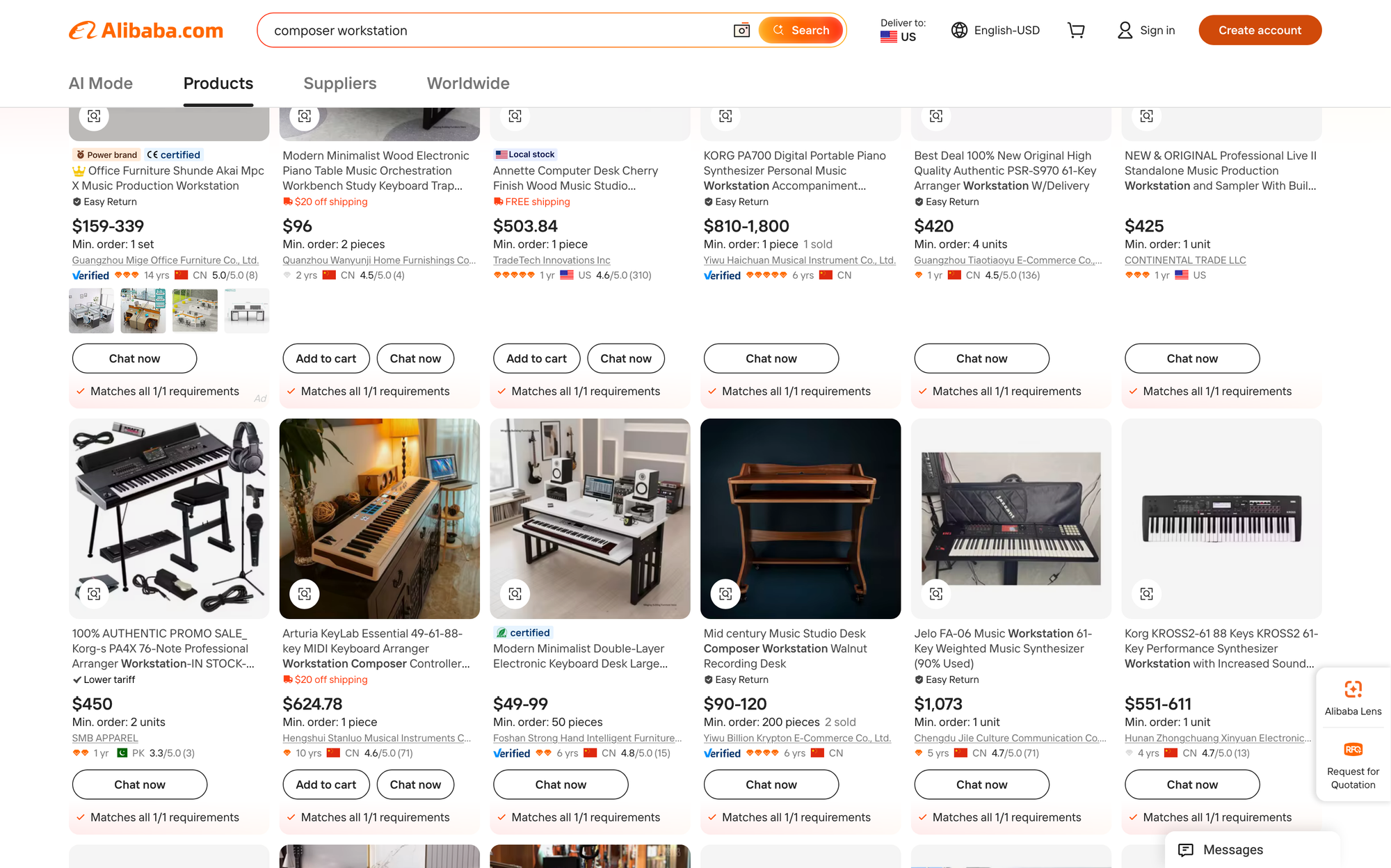
Back in February Chris Elsasser was watching a video before bed. This video was about starting a product business and finding manufacturers in your specific niche. The presenter in the video mentioned searching Alibaba to find direct contacts with factories in China. Elsasser has a product business, but makes everything in his own shop. Nevertheless, he was curious about what was out there, so he searched for something he makes and sells: "music recording desk." To his surprise one of the top results looked awfully familiar, "the third result was my desk, literally” he says. “I took the pictures, that's the picture of the desk in my studio."
That night he put down his phone and went to bed annoyed, but the next morning he had a thought, "I got to get that desk."
Elsasser, owner of Munstre Studio Furniture, manufactures high-end desks and racks for musicians and recording studios. He had inadvertently discovered that someone was selling knock-offs of his ‘Composer’ recording studio desk on Alibaba. The seller on Alibaba had stolen the images from the Munstre website, and were presenting them as something you could buy from them.
"I try to have a distinct style with the way that I am shooting everything,” he tells me. “I shot that desk three years ago. It's in my photo space." Elsasser continues, "So of course I clicked the link."
Alibaba is a Chinese wholesale ecommerce and technology company, akin to Amazon. You might have heard of their sister site, Aliexpress. The Alibaba seller, Yiwu Billion Krypton E-Commerce Co., Ltd., appears to sell and manufacture a range of products from gun safes to martial arts equipment. They are a wholesale manufacturer and seller, and list their studio desk at $120 with a minimum quantity of 200, at the time of writing. "The pricing was insanely low," says Elsasser. The price of the knock-off desk is less than the cost of the raw materials for the real thing, he tells me.
Elsasser contacted the seller to see if he could buy one, just one. He tells the seller that he's setting up an educational recording studio, and needs multiple stations, but he needs a sample to ensure it would hold everything they had to have at each station. None of this is true of course, but he was worried they might find out who he was, and refuse to send the desk.
"I have to see what they're making because there's no way that they know why I put certain contours into the joinery, and what's happening with some hidden joinery which are really important to the structure," Elsasser said. "I just know that there's no way that they're gleaning that from the photos." He sent the message and waited.
It's not a revelation to say that the internet is full of scams, grifts, and knock-off products. Social media is rife with folks celebrating dupes or lying about having legitimate luxury products. Status matters, but affordability is a priority. People in-the-know with knowledge of high-end, quality products can easily spot the difference, but those people aren’t the scammers target audience.
To a scammer, It's trivial to steal images, copy account information, or even recreate an entire website. A potential buyer sees the beautiful imagery of the end result, and would rightfully assume that the seller is merchandising in good faith. Quality imagery of well-made products present a presumption of the priors: research, design, testing, iteration, effort, practice.
It's common to find dropshipper accounts on Etsy and Instagram selling items acquired from storefronts or manufacturers on Alibaba, but with an elevated presentation, a backstory, and a healthy markup.
A few weeks pass, and Elsasser finally hears back from the seller. They offer to sell him a single unit for $200. While still incredibly cheap compared to his own product, it's an expensive way to satisfy a curiosity.
He agreed though, and it surprisingly took a while to nail down the details. "They had some back and forth about dimensions and all that kind of stuff," he says. Not only was it not a finished product ready to ship, it wasn't even ready to make. "I had suspected there's no way that they've made one of these. I think they just stole the images, put all the stuff on there. and we're just waiting for an order to come in."
Elsasser gave them the rough dimensions of the desk he makes, which are actually in the images they stole from him. He had the desk shipped to a local machinist he works with in order to complete his undercover acquisition.
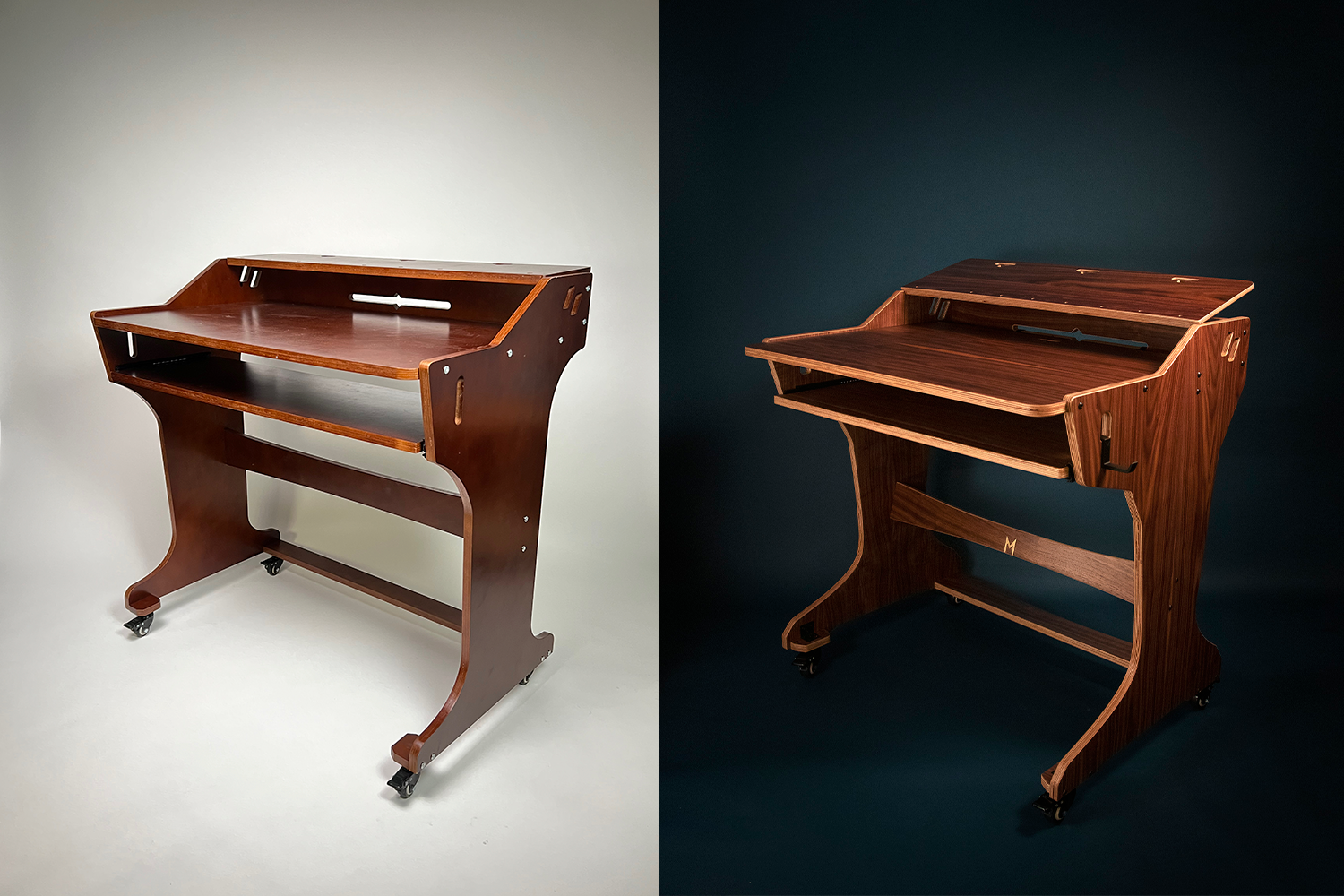
Six weeks later the desk arrives. "They did everything I was kind of hoping, which was putting all the contours in and stuff that exist on my product, but none of them serve a function," muses Elsasser.
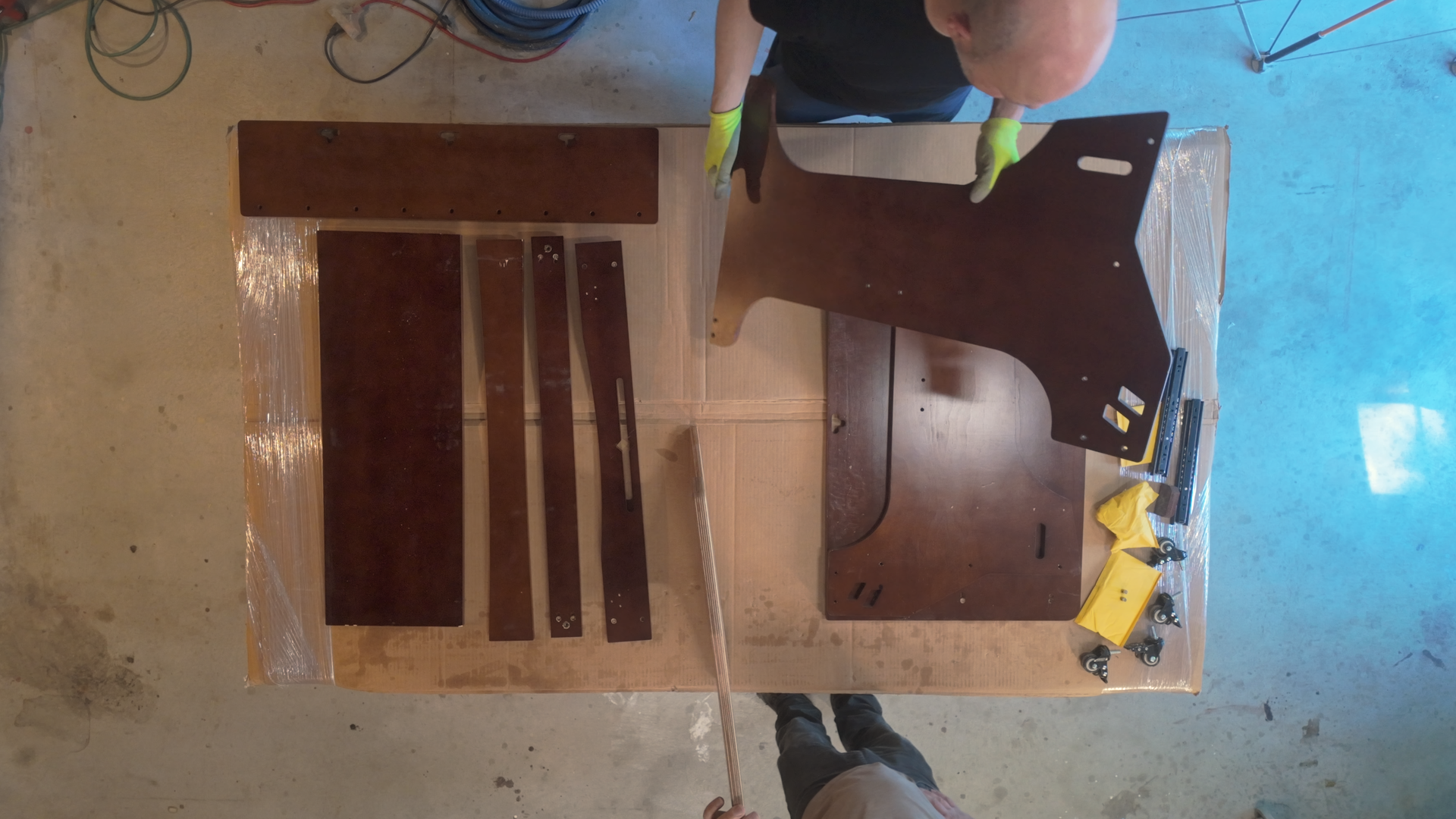
Donning gloves, Elsasser performed a careful unboxing of the clone. During the examination the difference between his desk and the knock-off were visibly and immediately apparent: Non-sensical joinery, holes in the wrong place, an overwhelming amount of extra hardware, low-quality material, and damage to finished surfaces. "I could almost feel the frustration of the person making this."
And due to his experience and familiarity with what is essentially his own product, Elsasser almost didn't notice that the desk didn’t come with any instructions. "I know what parts I'm looking at because I can see how they ripped me off," he tells me. He wrote to the seller and asked for instructions, and their recommendation was "going slowly."
"So I could see from all the parts and just being in this business like I could see I was going to assemble it no problem." Elsasser continues, "but then that made me realize also not everyone has that intuition, this could have showed up to somebody who was purchasing this and doesn't know how to put something together and they got all these fasteners everywhere."
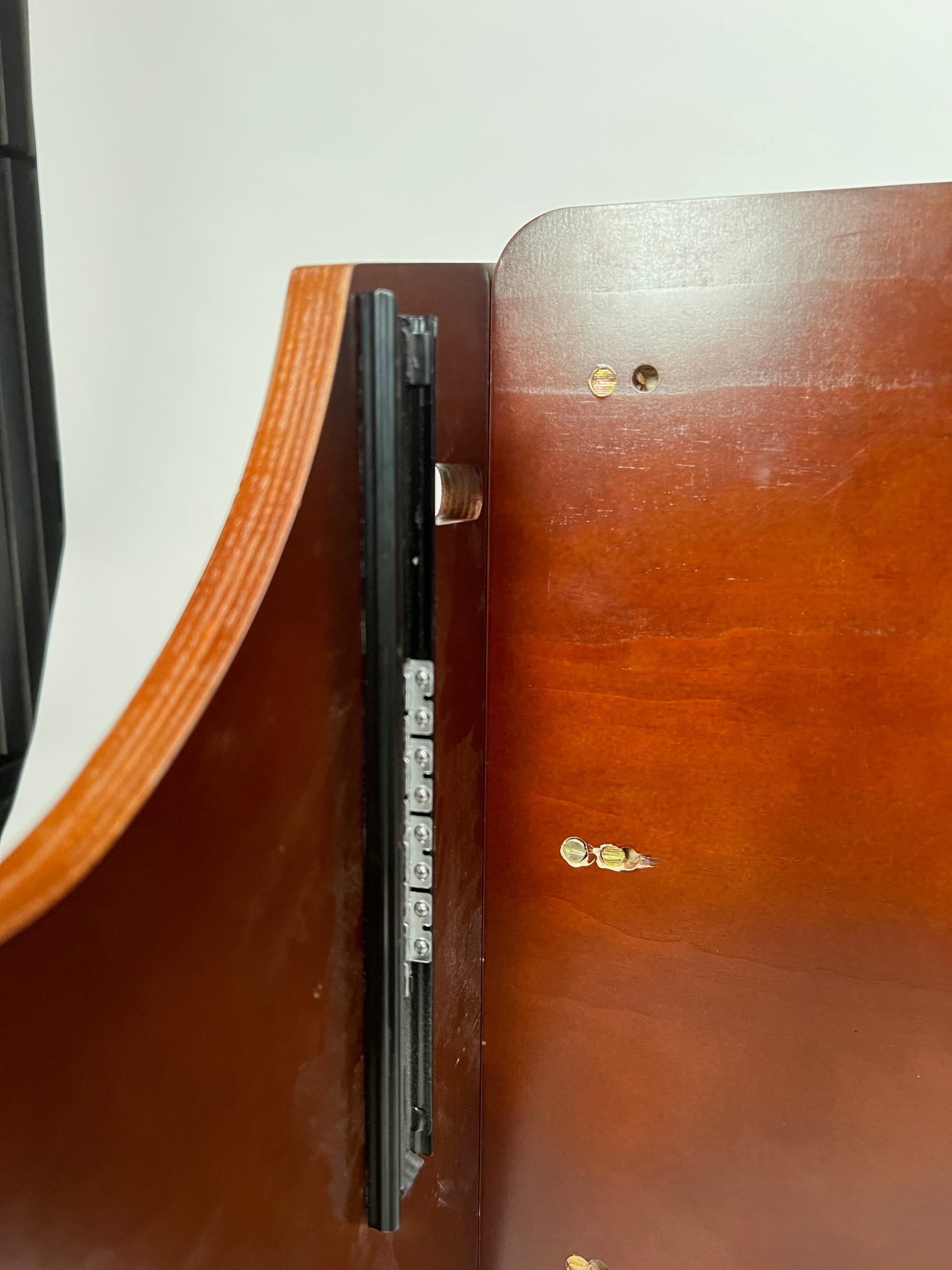
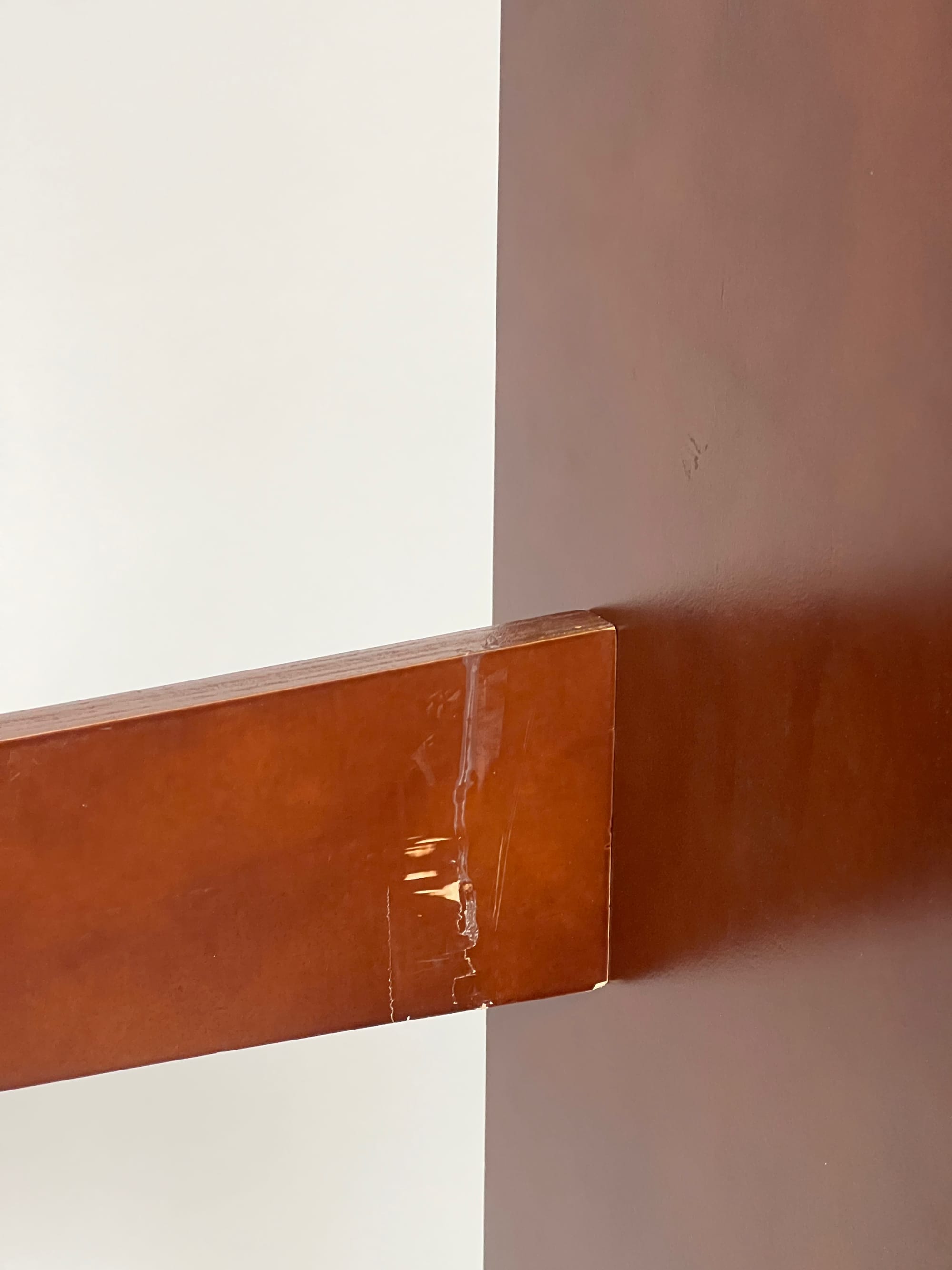
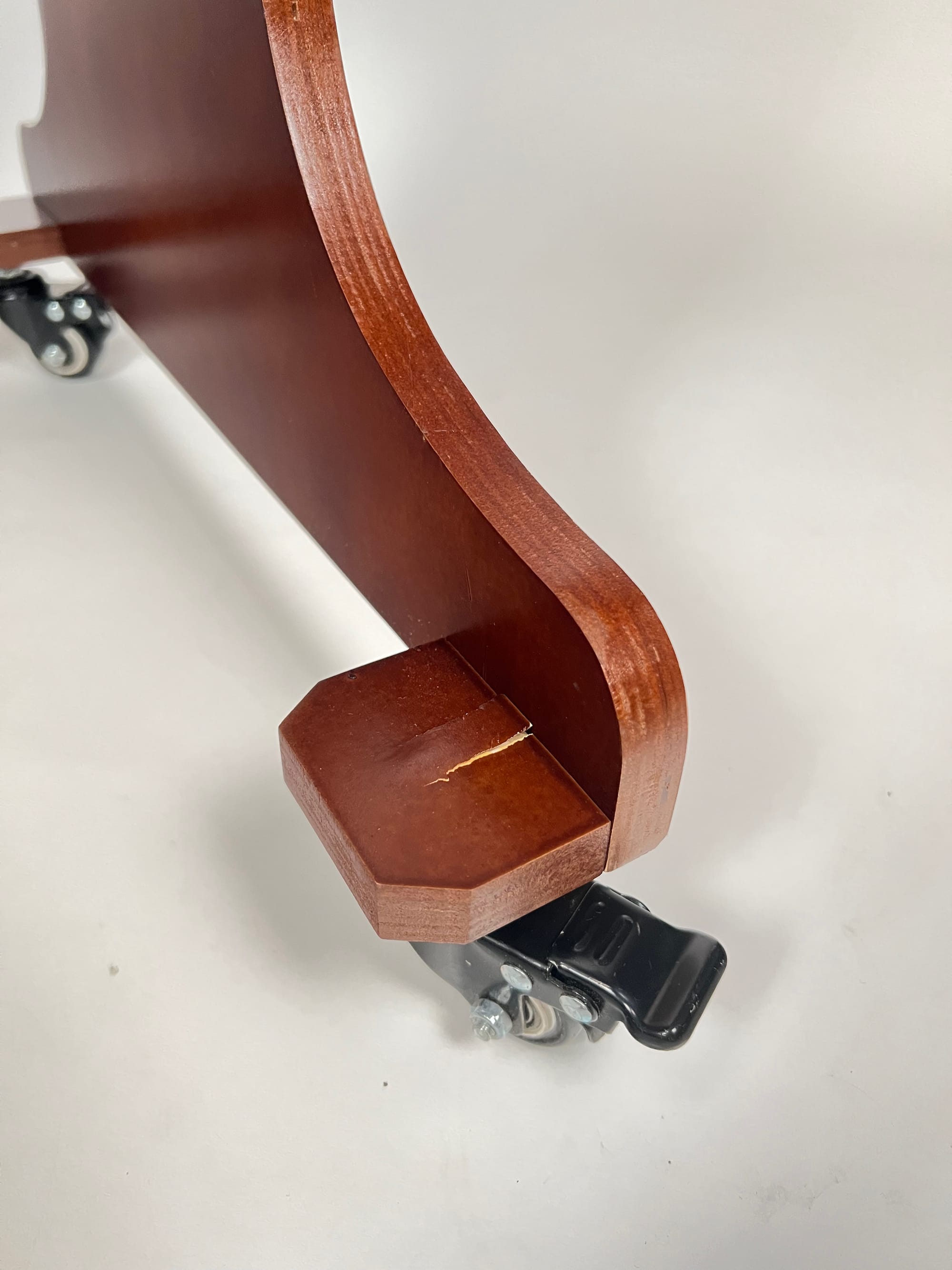
Detailed shots of the knock-off desk. Images courtesy of Chris Elsasser
Elsasser has years of woodworking experience and a tacit understanding of the needs of musicians. Design solutions are made with knowledge of the problem from experience or research. It's detailed and exacting work. Knock-offs substitute the original design problem with one of production and logistics: how to make a copy, build it as cheaply as possible, and sell it for a profit.
The distinction between approaches brings to mind some lines from The Builders by Henry Wadsworth Longfellow.
For the structure that we raise, Time is with materials filled; Our to-days and yesterdays Are the blocks with which we build.
Truly shape and fashion these; Leave no yawning gaps between; Think not, because no man sees, Such things will remain unseen.
In the elder days of Art, Builders wrought with greatest care Each minute and unseen part; For the Gods see everywhere.
And this distinction raises a question: Is the knock-off good enough?
To many, appearance and functionality is enough. Intention, details, and effort put into the product are deemed superfluous and unnecessary, until neglect for good work reaches a tipping point that impacts said appearance and functionality. In this case, what the consumer is buying and what the seller is selling has become misaligned. The stolen product images are selling one thing and the seller is creating something else. There’s no way to square the two.
Elsasser's a musician at heart. "That's my true passion," he says, "it's something I do endlessly in my free time." But that doesn't pay the bills, the woodworking does. He understands the needs of a musician, or studio when it comes to the furniture. His first customers came from people seeing social media posts about pieces he made for his own studio. "I didn't know initially how I was going to do it, but I was like, I understand this market. I understand people in studios. I love talking about studio gear with people." His music and woodworking background working in harmony to produce a product for a specific kind of person.
The phrase "Made in America" is puzzling and heavily politicized. Where something is physically made seems less important than who's making it, and under what conditions. Good workmanship can be found anywhere. "I believe more in if you have the ability to purchase something from more of a specialized maker you're going to keep that piece for longer and it's going to serve you better than just something off like a store shelf, generally speaking," says Elsasser.
Elsasser recorded the process of unboxing and putting together the knock-off. He told me he plans to eventually make a video about this whole saga to put on his YouTube channel when it's over. He also expressed anxiety about making any behind the scenes videos about his work in the future.
At the end of the day he's not really all that worried, as he tells me, "It hit at the right time for my business where I have full confidence in my business and what the identity of my business is." Practically speaking, he can't imagine someone having his site open in one tab, Alibaba in another, and debating over which one to get. "They're really different worlds."